
While most business owners understand the importance of comfortable surroundings from a human resources perspective, they often overlook the value of a comfortable environment in terms of overall safety and profitability.
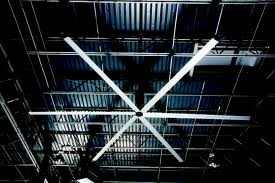 While comfort isn’t exactly measurable, human thermal comfort depends on a number of measurable factors: temperature, thermal radiation, humidity, and air speed. Research has shown that above 77 degrees Fahrenheit, there is a 2 percent decrease in productivity for every 1.8 degrees rise in temperature. During periods of hotter weather, the temperature in an enclosed building like a warehouse or manufacturing plant can warm quickly and then stay hot for months at a time. The average worker doesn’t just feel uncomfortable in the heat, it can actively distract them from work, leading to both a slower and less accurate performance and potential safety problems. Every business plans for the occasional off day, but what about an off season or an unproductive 5 months? Who can afford that?
Heating or cooling a very large building can be cost prohibitive, particularly when using traditional HVAC systems, but high volume low speed (HVLS) fans require much less energy to circulate air in large industrial or commercial facilities than HVAC systems do to cool that air further. In fact, when using both HVLS fans and HVAC systems, many companies have found they are able to raise the temperature within a facility between 3 to 5 degrees while maintaining worker comfort. This is because an HVLS fan works the same way that breeze does on a hot day, moving the air 2-3 miles per hour and making the space feel cooler even if it actually is not.
There are several other benefits of high volume low speed fans. They are able to operate in reverse, which means in addition to the usual air circulation pattern, they can pull the heat out of the ceiling and recycle it over and over for more use, leading to potentially large energy savings in winter. They also help control condensation which helps protect product integrity and maintain inventory. A dry, fresh environment is better for keeping food and produce better longer.
Additionally, the installation of a HVLS fan can help contribute to LEED certification credits in a number of categories, including energy and atmosphere, indoor environmental quality, and innovation and design. If LEED certification is a goal of your organization, talk to us about how adding HVLS fans to your building can help you meet that goal.
It may seem like a small thing – adding a fan to a building – but HVLS fans are designed with a specific goal: managing building temperature at a fraction of the cost of traditional heating and cooling systems. If that seems like a desirable outcome for your business, call us and let’s talk about how we can make that happen in your facility.