
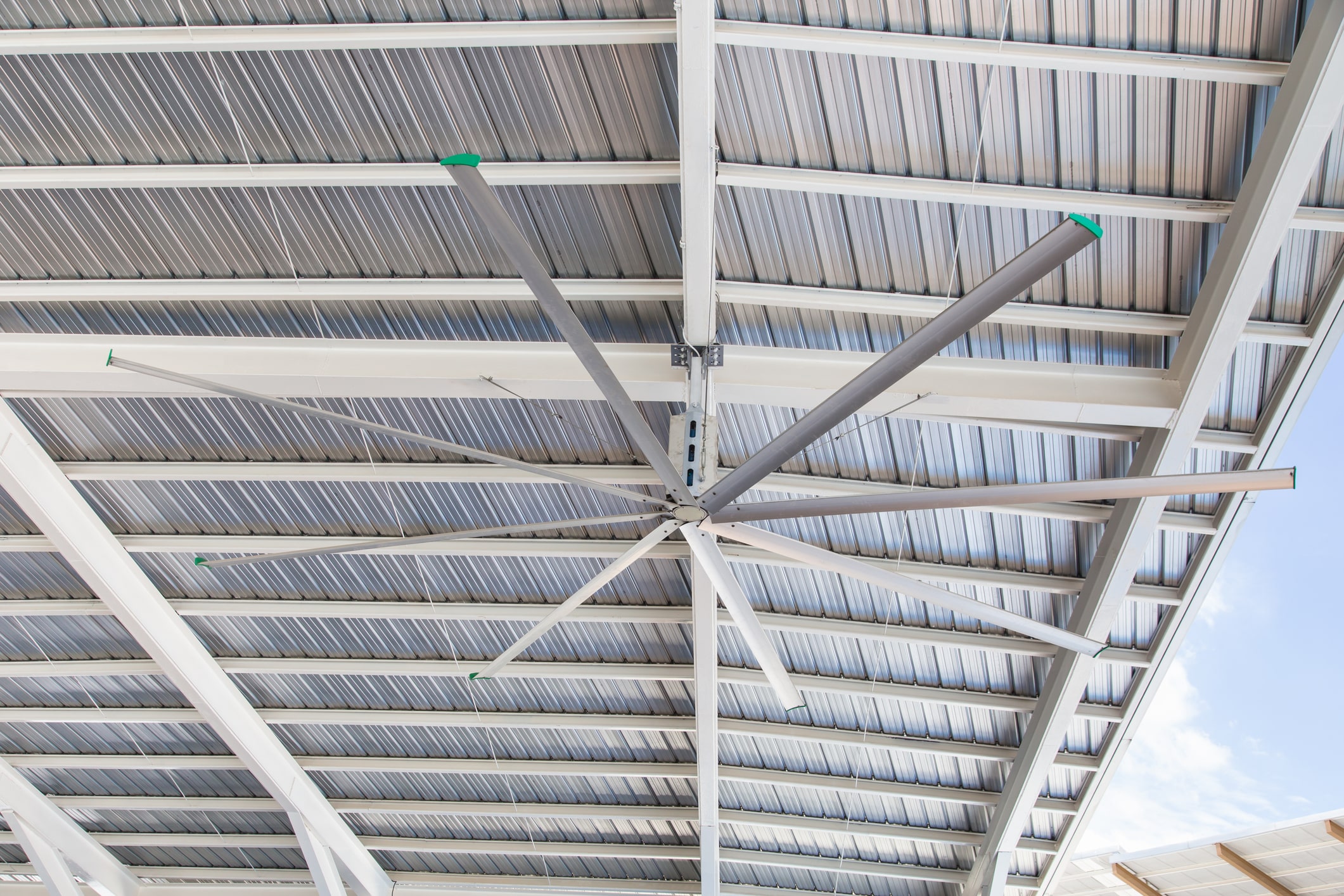
Whether you’re replacing HVLS fans that were incorrectly spaced or planning your first HVLS installation, one thing makes all the difference: working with an installer that takes an engineering-first approach. This is because correct HVLS fan placement can make or break your heating and cooling efforts. And in Michigan, where we experience the full spectrum of temperature fluctuation from 0 to 100 degrees within a calendar year, optimizing your heating and cooling system is crucial.
Every facility has different airflow challenges, and there is no one-size-fits-all solution for optimal heating and cooling. Unfortunately, many businesses install High Volume Low Speed (HVLS) fans based on general spacing guidelines or outdated advice. The result is underperforming systems, increased energy costs, and uncomfortable workspaces.
What Is HVLS Fan Placement and Why Does It Matter?
HVLS fans are large-diameter ceiling fans designed to circulate air in large spaces like warehouses, distribution centers, and manufacturing facilities. But unlike smaller fans, placement is absolutely critical to their performance.
That’s because structural elements like support beams, lighting, sprinkler systems, HVAC ductwork, and racking layouts can drastically affect how air moves through a building. What to the average person looks like “open air” can actually be a maze of airflow obstructions. A fan positioned without taking these into account may end up pushing air into the wrong zones, or worse, creating dead spots that defeat the fan’s purpose entirely.
The Pitfalls of “Typical Industrial Spacing”
The phrase “typical industrial spacing” is misleading. It implies that a default layout can work for any facility, but in practice, every building is different. Factors that influence HVLS fan placement include:
- Ceiling height and slope
- Beam and truss structure
- Floorplan layout
- Obstructions like vents or overhead doors
- Usage zones (assembly, storage, packing, etc.)
Installing a fan based solely on square footage or manufacturer minimums, without evaluating how air moves through the facility, often results in poor performance.
The Cost of Improper Fan Placement
A poorly placed fan can:
- Leave key areas uncooled or uncirculated
- Waste energy by creating inefficient airflow loops
- Add to heating and cooling costs instead of reducing them
- Shorten fan life due to overcompensation or improper use
Most importantly, it can lead to worker discomfort and decreased productivity, especially in hot or poorly ventilated areas.
Why Engineering-Driven Assessments Work
At Beuschel Sales, we don’t guess. We assess.
We start by understanding your building’s layout, obstructions, airflow patterns, and worker zones. Then we map out fan positions that ensure consistent, efficient air circulation across the entire facility. If you’re replacing an old system, we also evaluate whether your existing fan spacing is still serving your current operations.
Whether you’re addressing comfort, air quality, or energy savings, the right fan in the wrong place is still the wrong solution.
Don’t Let Poor Placement Undermine Your Investment
If your current HVLS system isn’t delivering results, or if you’re planning a new installation, contact Beuschel Sales. We serve facilities across West, Central, and Northern Michigan, from Holland to Lansing and Traverse City to Petoskey, and we’ll design a fan layout that works with your building’s internal layout, not against it.
Contact us today to schedule your HVLS site assessment.