
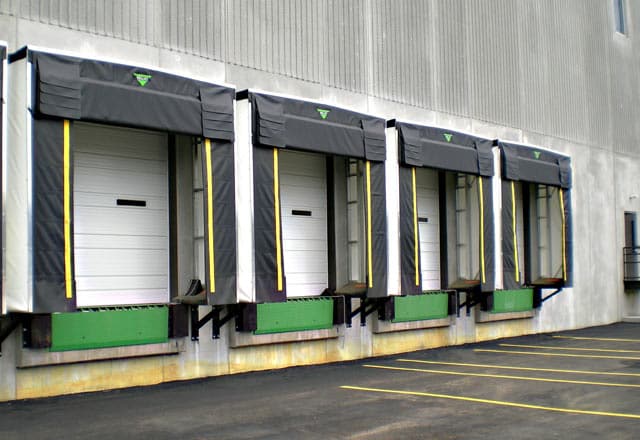
If you are in the process of planning a new warehouse or storage facility, you should take the time to consider what is best for the loading dock area. Because both product and personnel pass through the loading dock, you will need to design it carefully to ensure its efficiency, safety, and smooth operation. In this blog we will go over several key considerations for designing and planning a loading dock.
What To Consider When Planning a Loading Dock
Layout and Design:
First, determine the number of dock doors you will need based on your volume of incoming and outgoing shipments. If you anticipate further growth in your business, you should design the loading dock area with space for future expansion to accommodate any potential increases in shipping volume.
Consider the overall layout of your warehouse and how the loading dock integrates with other areas of the facility. Is there enough space for maneuvering trucks, pallets, forklifts, and other equipment? If there isn’t, that’s going to be a permanent problem.
Dock Door Types
Many facilities will need standard dock doors for shipping and receiving, but for facilities with a high volume of traffic, high-speed doors can improve operational efficiency a great deal. If you have questions about which type of dock door would be best for your facility, just ask!
Dock Equipment
Dock Levelers – Choose appropriate dock levelers to bridge the gap between the truck bed and the dock and facilitate smooth loading and unloading.
Dock Seals and Shelters – Install dock seals and shelters to create a seal between the truck and the dock, improving energy efficiency and protecting workers and goods from the elements.
Dock Bumpers – Use durable dock bumpers to absorb the impact between trucks and the dock and prevent damage to your facility’s structure.
Traffic Flow
Your facility should ideally have one-way traffic flow for trucks entering and exiting the loading dock to minimize congestion and enhance safety.
Dock Height
Maintain a consistent dock height across your loading dock doors to accommodate different truck heights and facilitate the use of standard equipment.
Safety Measures
Install safety barriers or bollards to protect the loading dock area from collisions with forklifts or other equipment. Too many businesses do not install proper lighting at the loading dock, but it can make a real difference in safety and productivity.
Energy Efficiency
Use energy-efficient lighting and equipment to reduce environmental impact and operational costs. Using the right loading dock doors can also help to conserve heat in your facility.
Compliance and Regulations
ADA compliance and compliance with local regulations are very important. Ensure that your new loading dock area complies with accessibility requirements, and be aware of and comply with local building codes, zoning regulations, and safety standards.
By carefully considering the above factors, you can design a loading dock that enhances the overall efficiency, safety, and functionality of your warehouse or storage facility. If you have questions about loading dock doors or equipment, don’t hesitate to call Beuschel Sales. We can work with you to ensure that your loading dock meets industry standards as well as your specific operational needs.